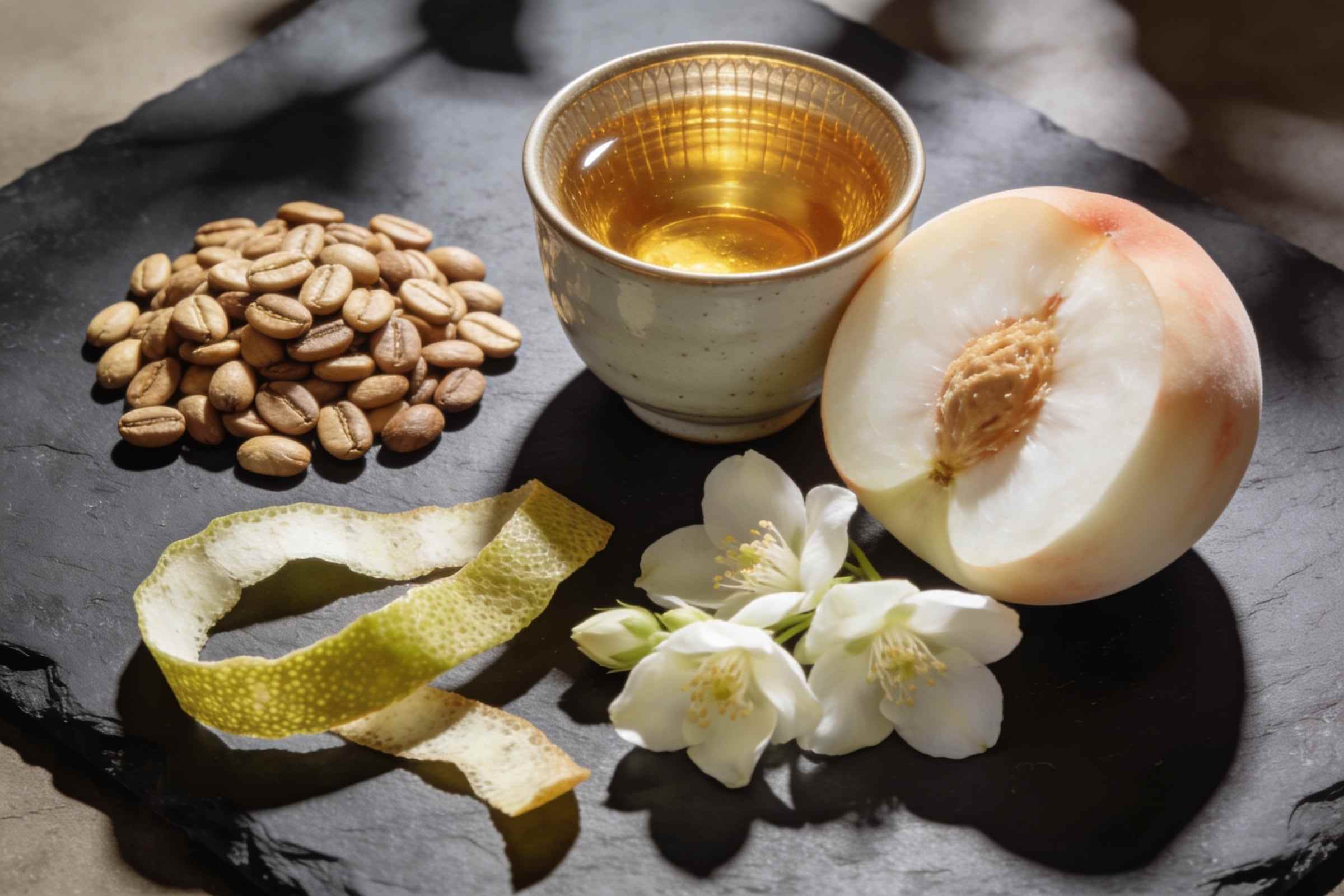
Washed heirloom coffee from 2,150 metres, like tea with a peach in it
Tasting notes
White peach · Jasmine · Bergamot
Roast: Light
£12.50250 g bag· £11.25 a month
Uraga sits high in the Guji zone, where coffee grows half-wild under the shade of old trees. Around six hundred families pick their cherries by hand and carry them to a washing station they share, where the fruit is pulped, fermented overnight in tanks of mountain water and dried slowly on raised beds for two weeks.
We have bought from the same station for four years. Each spring we cup a table of lots and choose the one that tastes most like a white peach.
We roast it lightly and quickly, dropping it about seventy seconds after first crack, so the florals stay. It is our filter coffee at the bar for most of the year.
How we brew it
V60, one cup
Coffee
15 g, ground like sea salt
Water
250 g at 94 °C
Time
About 3 minutes
01Rinse the paper with hot water and pour it away.
02Bloom with 40 g of water and swirl; wait 40 seconds.
03Pour slowly in circles to 150 g, then to 250 g by 1:45.
04Give it a gentle swirl and let it drain, about 3 minutes in all.
Questions
Is it good as espresso?+
It makes a bright, floral espresso, lovely on its own and lost in milk. For a flat white, take the Mogiana.
Why does it taste like tea?+
Washed Ethiopian coffee is light-bodied and clean, and the floral notes read like jasmine tea. Brew it a touch finer if you'd like more weight.
Morning! Ask me which coffee suits your brewer, about subscriptions and postage, the café menu or how to find us.
The AI chat is not connected on this site yet.
It runs on your own AI key: add ANTHROPIC_API_KEY (Claude) or OPENAI_API_KEY (OpenAI) to your site's environment and redeploy. No key is included with the template, and this demo does not provide one.